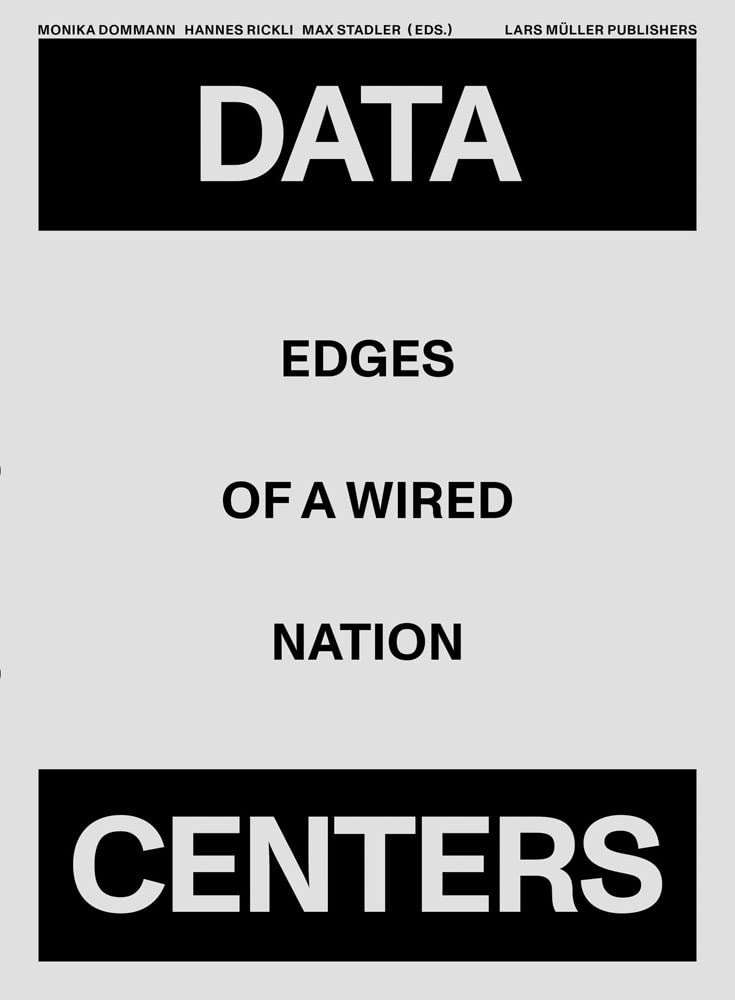

Data Centers

Edges of a Wired Nation

320 pages

English language

Published July 15, 2020 by Lars Muller Publishers.

ISBN:
978-3-03778-645-1
Copied ISBN!

View on OpenLibrary

View on Inventaire

An investigation into the complex politics of data centers, through photographs and essays

Often hidden in plain sight, data centers are the backbone of our internet. They store, communicate and transport the information we produce and access daily along invisible pathways. The industry of data centers comes entwined with an iconography of generic, bland and sterile architectures: placeless, inconspicuous, anonymous structures—buildings, cable ducts, junction boxes and landing sites that could be anywhere, generating virtual infrastructures that are both everywhere and nowhere.

Bringing together photography, essays and case studies, Data Centers explores the entanglements of place, past and digital infrastructure, taking Switzerland as its example. Beyond the official story—Switzerland’s favorable alpine climate, relatively low energy costs, the political stability of the area and its strategic positioning in Central Europe—Data Centers uncovers the narratives of techno-nationalist aspirations; of Swiss Chinese interdependence; of deregulation and once-almighty telecommunications enterprises; of cold-war legacies …

1 edition

Review of 'Data Centers' on 'GoodReads'

This book is a broad-reaching anthology of essays and photography about the history and culture of digital data and Switzerland. The essays are varied, from a history of Swiss-Chinese relations in data centres to an essay about destruction of hard drives to keep data secure. Each is well outlined and goes into depth on the specific topic. The photographs are simultaneously stimulating, giving a deep dive into the bizarre centre for supercomputing in the Swiss mountains or the stomach-churning walls of CPUs used in a blockchain currency mining facility.


The book design is also really nice, although a couple of the essays suffer from some very poor information graphics that are misleading and hard to read. A couple of the essays were a little inaccessible, perhaps down to translation issues, but overall they were enjoyable and varied, and offered a cultural archaeology of data in a unique and enjoyable format.