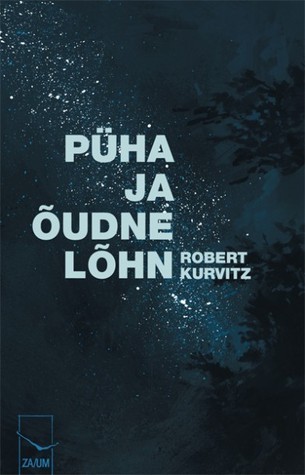

Dee 📖 (book aspect) reviewed Sacred and Terrible Air by Robert Kurvitz
Yes, everything is possible for this world
4 stars
Like probably most people at this point, I read Sacred and Terrible Air because of Disco Elysium. Disco Elysium is, notably, permeated throughout by an undercurrent of a particular sort of bleakness. Sacred and Terrible Air, on the other hand, is bleak.
Centering themes of destructive nihilism, and contrasting them with those of dogged determination to persevere, the book can at times seem cynical and nihilistic itself. It's not just that bad things happen, it's that nothing matters and also bad things happen. On the other hand, Kurvitz manages to do a good job with characters that, while flawed in morals and personality, manage to be engaging. Finding out what happens to them is compelling, despite the overall bleakness of the overarching story and the setting, and that kind of tension makes the book more compelling.
The book follows a present-day plot, a parallel plot told through …
Like probably most people at this point, I read Sacred and Terrible Air because of Disco Elysium. Disco Elysium is, notably, permeated throughout by an undercurrent of a particular sort of bleakness. Sacred and Terrible Air, on the other hand, is bleak.
Centering themes of destructive nihilism, and contrasting them with those of dogged determination to persevere, the book can at times seem cynical and nihilistic itself. It's not just that bad things happen, it's that nothing matters and also bad things happen. On the other hand, Kurvitz manages to do a good job with characters that, while flawed in morals and personality, manage to be engaging. Finding out what happens to them is compelling, despite the overall bleakness of the overarching story and the setting, and that kind of tension makes the book more compelling.
The book follows a present-day plot, a parallel plot told through flashbacks, and then will just drop into assorted vignettes set at various points in time, which will follow events and characters that are more or less connected to the main plot. At first brush, this can be a bit disorienting, but overall it works as a literary style.
The books many plots and unsolved questions remain unsolved at the end, which can be a bit disappointing. The book was supposed to be just one entry in the series, so perhaps it makes sense that there would be dangling threads left untied, but one wished they would have been tied off anyway.
The fan translation by Group Ibex seems to be of good quality. Without the ability to speak Estonian, I can at least compare it favorably to how translations of such works generally go. At times, things are phrased in ways that feel slightly off compared to how they would be, were they written in English in the first place, but overall, the prose flows well enough and there aren't really any moments of jarring awkwardness that one may find in more amateur translations.